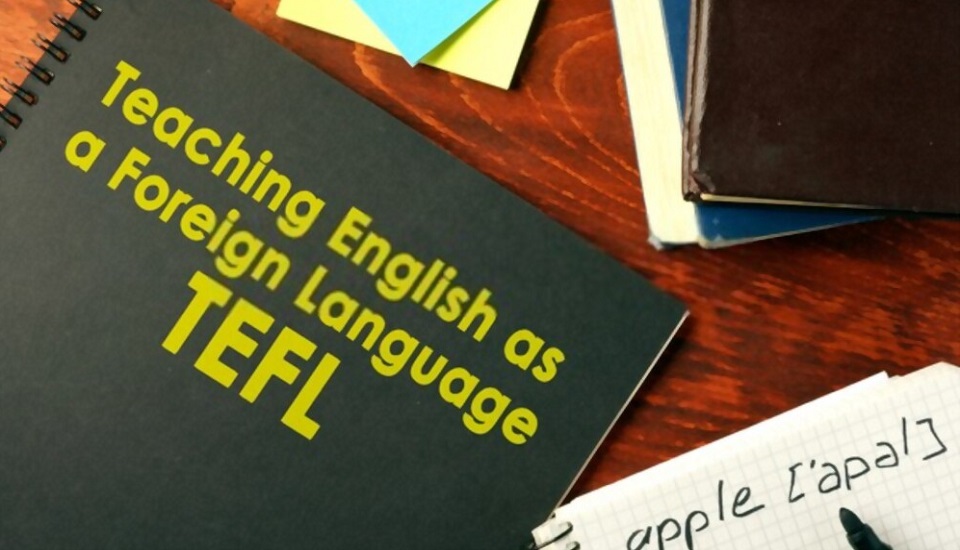
If you are planning to teach English abroad or online, you will probably come across two terms very quickly: TEFL and TESOL.
They often appear together in job advertisements, course descriptions and teaching forums, which naturally raises the question:
Is there actually a difference between TEFL and TESOL — and does it matter which qualification you choose?
The short answer is that the terms do have different meanings, but in modern English-language teaching they overlap considerably. For most new teachers, the quality, length and content of the course matter more than the acronym printed on the certificate.
This guide explains the difference clearly, without making it more complicated than it needs to be.
What Does TEFL Mean?
TEFL stands for Teaching English as a Foreign Language.
Traditionally, TEFL refers to teaching English in a country where English is not the main language used in everyday life.
For example, a teacher working with English learners in:
- China
- Japan
- Thailand
- Vietnam
- Spain
- Brazil
would commonly be described as a TEFL teacher.
The term is therefore strongly associated with people who want to teach English abroad.
TEFL courses usually focus on practical teaching skills such as:
- Lesson planning
- Classroom management
- Teaching grammar
- Teaching vocabulary
- Pronunciation
- Speaking and listening
- Reading and writing
- Error correction
- Student assessment
For someone planning an international teaching career, TEFL is often the term they encounter first.
What Does TESOL Mean?
TESOL stands for Teaching English to Speakers of Other Languages.
TESOL is a broader term.
It can include teaching English in foreign-language environments, but it can also refer to teaching English to people who are living in an English-speaking country.
For example, a teacher working with international students, migrants or multilingual learners in the UK, Australia, Canada or the United States may be described as working in TESOL.
So, in traditional usage:
TEFL = teaching English where English is not the main local language.
TESOL = teaching English to speakers of other languages in a broader range of settings.
TEFL vs TESOL: The Simple Difference
The easiest way to understand the distinction is this:
| TEFL | TESOL |
|---|---|
| Teaching English as a Foreign Language | Teaching English to Speakers of Other Languages |
| Commonly associated with teaching abroad | Broader term covering different teaching environments |
| Often used by international TEFL schools | Frequently used in education and teacher-training contexts |
| Strongly associated with EFL classrooms | Can include both EFL and ESL environments |
However, this distinction is not as rigid in practice as it looks on paper.
Why Are TEFL and TESOL Often Used Together?
Because the English-language teaching industry is international, terminology has become increasingly flexible.
You may see employers advertise for candidates with:
- TEFL certification
- TESOL certification
- TEFL/TESOL certification
- TEFL, TESOL or equivalent
- ESL teaching certification
In many cases, the employer is not making a strict academic distinction between TEFL and TESOL.
They are really asking:
“Have you received appropriate training to teach English to non-native speakers?”
That is why choosing a course based only on whether it says TEFL or TESOL can be misleading.
The better question is:
What does the course actually teach?
Is TEFL Better Than TESOL?
Not automatically.
A high-quality TEFL course can be better than a weak TESOL course, and the reverse can also be true.
The acronym alone does not tell you:
- How many hours the course includes
- What the curriculum covers
- Whether there are assessments
- Whether lesson planning is included
- Whether the course is accredited
- Whether trainer support is available
- Whether employers can verify the certificate
These practical factors matter far more.
For example, a comprehensive 120-hour TEFL course may provide significantly more useful preparation than a very short TESOL course completed in a few hours.
Likewise, a substantial TESOL programme may offer more depth than a basic TEFL certificate.
Is TESOL More Advanced Than TEFL?
No.
TESOL is not automatically a higher-level qualification than TEFL.
The terms describe the field or context of English-language teaching; they do not by themselves indicate course difficulty.
A 40-hour TESOL course is not necessarily more advanced than a 120-hour TEFL course simply because it uses a different name.
When comparing programmes, look at:
- Course hours
- Curriculum
- Assessment
- Accreditation
- Support
- Intended outcomes
These tell you much more than the title.
Which Qualification Do Employers Prefer?
There is no universal answer because different employers use different terminology.
Some schools specifically request TEFL.
Others ask for TESOL.
Many accept either.
You will often see vacancies written as:
“120-hour TEFL/TESOL certificate required.”
That wording tells you something important: the employer is often more interested in the level and substance of your training than the acronym.
If you already know where you want to teach, look at real job advertisements in that country and see what employers are asking for.
Which Is Better for Teaching Abroad?
If your main goal is to teach English abroad, TEFL is usually the more familiar term.
That is especially true in popular teaching destinations across Asia, Europe and Latin America.
Someone searching for jobs in China, Vietnam or Thailand, for example, is likely to encounter the term TEFL frequently.
That does not mean a TESOL qualification will automatically be rejected.
What matters is whether your qualification meets the employer’s expectations and any relevant work-permit requirements.
Which Is Better for Teaching English Online?
Either can be suitable.
Online English teaching depends less on whether your certificate says TEFL or TESOL and more on whether you have useful teaching skills.
Online teachers need to be able to:
- Plan lessons
- Explain language clearly
- Keep students engaged
- Correct errors appropriately
- Use digital teaching tools
- Adapt materials for one-to-one or group lessons
A comprehensive teacher-training course can prepare you for these skills regardless of the label.
Teachers who plan to work primarily online may also benefit from specialist training focused on virtual teaching.
TEFL vs TESOL vs ESL
There is one more term that often creates confusion: ESL.
ESL stands for:
English as a Second Language
Traditionally, ESL refers to teaching English to learners who are living in an English-speaking environment.
So the traditional distinction is:
- TEFL – teaching English in a non-English-speaking country
- ESL – teaching English in an English-speaking country
- TESOL – broader term that can cover both
In reality, these terms are often used loosely.
That is why prospective teachers should focus more on the training itself than on becoming too concerned about terminology.
What Should You Look for Instead of the Acronym?
When comparing TEFL and TESOL courses, ask these questions.
How Many Hours Is the Course?
A 120-hour qualification is one of the most commonly encountered benchmarks in international English teaching.
Longer courses can provide additional preparation.
What Does the Curriculum Cover?
A useful course should include core areas such as:
- Teaching methodology
- Lesson planning
- Classroom management
- Grammar
- Vocabulary
- Pronunciation
- Reading
- Listening
- Speaking
- Writing
- Assessment
Is There Real Assessment?
A credible teacher-training course should require students to demonstrate understanding.
Quizzes, written work and lesson-planning assignments can all form part of meaningful assessment.
Is the Course Accredited?
Accreditation can provide external quality oversight, but students should always check who the accrediting organisation is and whether the relationship can be verified.
Is Support Available?
For first-time teachers, access to a trainer or academic support can be particularly useful.
Can the Certificate Be Verified?
Employers may want to confirm that a qualification is genuine.
A certificate-verification facility therefore adds another layer of credibility.
Does It Matter What Is Written on Your Certificate?
Sometimes, but usually not as much as students expect.
Employers may look at the title of the qualification, but they can also consider the number of training hours and provider.
A strong course should give you a qualification that accurately reflects the training you completed.
The more important question is whether the certificate supports the type of teaching job you want.
Can You Have Both TEFL and TESOL?
Yes.
Some providers use both terms in their training or certification because the skills overlap.
A teacher may also complete one qualification and later take additional training in another area.
The English-teaching profession is broad, and teachers often continue developing through specialist courses such as:
- Business English
- Teaching Young Learners
- Online Teaching
- Exam Preparation
- English for Specific Purposes
Your first qualification does not have to define your entire career.
Do You Need a Degree for TEFL or TESOL?
Not necessarily to take the course.
But employment requirements are separate.
Some employers and countries require a bachelor’s degree for legal or professional reasons.
Others are more flexible.
That means you should always distinguish between:
“Can I take this TEFL/TESOL course?”
and:
“Can I legally work in the country I want to teach in?”
Those are not always the same question.
Which Should a Beginner Choose?
For most beginners, I would not choose based on the acronym alone.
Instead, choose the course that gives you:
- Enough training hours
- A clear curriculum
- Practical teaching preparation
- Assessment
- Support
- Transparent accreditation
- A verifiable qualification
If you are specifically interested in teaching abroad, a comprehensive TEFL qualification is a natural place to start.
TEFLEN offers online options including:
Advanced 120-Hour TEFL Course
https://teflen.com/Advacned-120-TEFL-Course
Master 150-Hour TEFL Course
https://teflen.com/Master-150-TEFL-Course
Students can also compare the different course levels here:
The aim is not to choose the course with the most impressive acronym. It is to choose the one that prepares you properly for the teaching environment you actually want to enter.
Frequently Asked Questions
Is TEFL the same as TESOL?
Not exactly. TEFL traditionally refers to teaching English in foreign-language environments, while TESOL is a broader term covering English teaching to speakers of other languages. In practice, the terms often overlap.
Which is better, TEFL or TESOL?
Neither is automatically better. Course quality, hours, curriculum, assessment and employer requirements matter more.
Is TEFL accepted internationally?
TEFL qualifications are widely used in international English teaching, but individual employers and countries determine their own requirements.
Is TESOL accepted for teaching abroad?
It can be. Many employers accept TEFL, TESOL or equivalent qualifications, depending on the course and position.
Do I need both TEFL and TESOL?
Usually not. A strong qualification in one area may be enough for many positions. Additional specialist training can be more useful than collecting similar certificates.
Is a 120-hour TEFL course enough?
A 120-hour course is a commonly encountered benchmark in international TEFL employment. Requirements still vary by employer and country.
Can I teach online with TEFL or TESOL?
Yes. Both can provide useful preparation for online teaching, particularly when the course includes practical methodology and lesson planning.
Does TEFL expire?
TEFL qualifications generally do not have a conventional expiry date, although employers can set their own policies.
TEFL or TESOL: Which One Should You Choose?
If you remember only one thing from this guide, let it be this:
Don’t choose a teaching qualification because of the acronym. Choose it because of the training behind it.
TEFL and TESOL describe slightly different traditions within English-language teaching, but the practical overlap is substantial.
For most new teachers, a comprehensive course with meaningful training, assessment and support will matter far more than whether the certificate says TEFL or TESOL.
If your goal is to teach English abroad or online, start by researching the market you want to enter and then choose a qualification that gives you the skills — and not just the certificate — to succeed there.